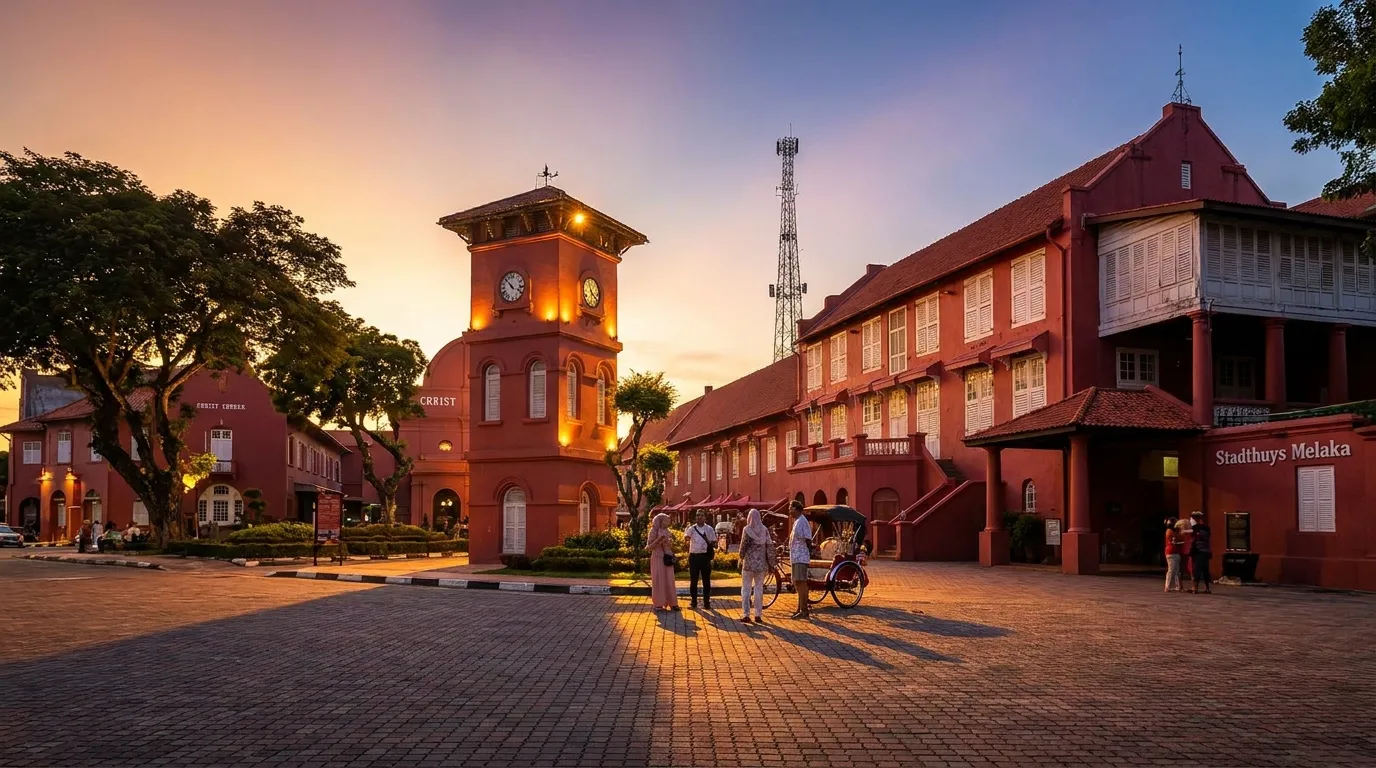
Built by the Dutch in 1650, the Stadthuys is believed to be the oldest surviving Dutch building in the East, a landmark so iconic it gave Melaka its signature red hue.
Standing in the centre of Dutch Square, the Stadthuys (Town Hall in Dutch) has presided over Melaka for more than three and a half centuries. Completed in 1650, it served as the official residence and office of Dutch governors until the British took control in 1824.
The Building
The structure is a faithful reproduction of early Dutch colonial architecture transplanted to the tropics, with thick walls, heavy hardwood doors, and louvred shutters painted in the now-iconic crimson-red of Melaka’s historic centre. The paint itself has become symbolic: when the Dutch Square was restored in the 1980s, the red was extended to neighbouring buildings, creating the monochromatic streetscape visitors photograph today.
History & Ethnography Museum Inside
The Stadthuys now houses the Museum of History and Ethnography across three floors:
- Ground floor: Portuguese and Dutch colonial artefacts, including maps, ceramics, coins, and navigational instruments
- First floor: The Baba Nyonya (Peranakan) domestic world, including furniture, costume, and wedding paraphernalia
- Second floor: The Malay world, including royal regalia, musical instruments, and folk artefacts
Photography
The building’s exterior is the most-photographed subject in Melaka. For the cleanest shot:
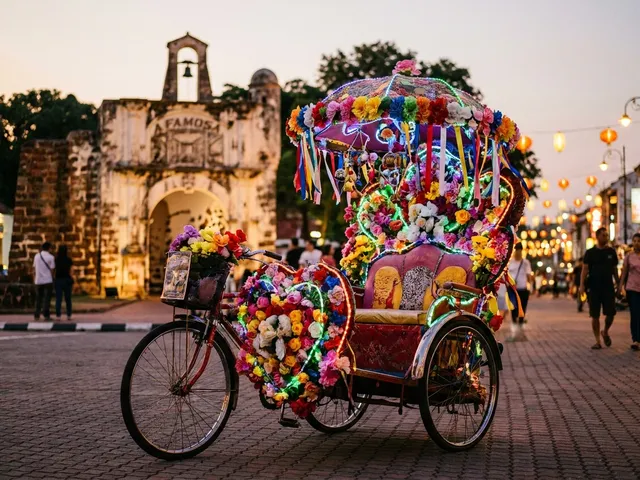
- Sunrise - soft light, empty square, trishaws parked quietly
- Golden hour (1 hour before sunset) - warm raking light that deepens the red
A Christ Church flanks the square on the south side; including it creates the quintessential Melaka frame.