One small port.
Six centuries
of empire.
Founded by a Sumatran prince in 1400. Conquered by the Portuguese, taken by the Dutch, ceded to the British, occupied by the Japanese, and free since 1957. Every empire that touched Southeast Asia left a mark on this single square mile.
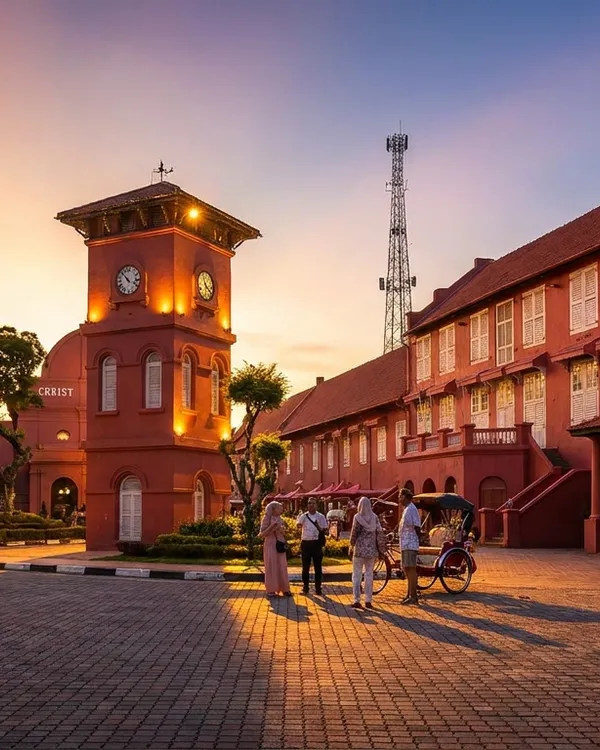
The Golden Era
of the Sultanate.
Founded by Parameswara, a Sumatran prince fleeing a coup, Melaka grew within a single generation into the most vital port in Southeast Asia, a strategic clearinghouse between the trade winds of the Indian Ocean and the South China Sea.
By the time Ming Admiral Zheng He arrived in 1405, Melaka was already a thriving entrepôt. Persian, Arab, Indian, Chinese, Javanese and Malay traders mixed in its bazaars. The Sultanate adopted Islam in 1414, and Malay became the lingua franca of regional commerce.
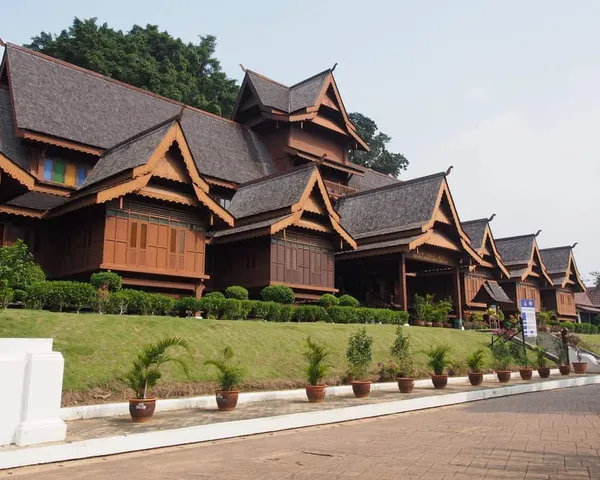
Portuguese rule
and A Famosa.
Afonso de Albuquerque captured Melaka in August 1511, breaking the Sultanate after a single brutal month of siege. The Portuguese built a vast fortified city, anchored by the A Famosa fortress, to protect their newly-monopolised spice trade.
Catholic missionaries arrived, including Francis Xavier, who is briefly entombed in St Paul's before being moved to Goa. The Portuguese left behind a cuisine (Eurasian-Portuguese, alive at the Portuguese Settlement today) and a community that still speaks Kristang, a 500-year-old creole language.
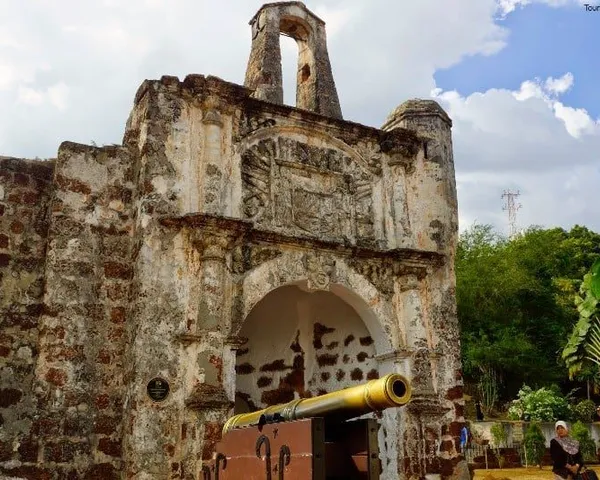
Dutch order
and the salmon walls.
After a six-month siege, the Dutch East India Company took Melaka in January 1641, and then quietly let it decline. Their priority was Batavia (Jakarta); Melaka existed mainly to prevent rivals from using it. Still, they built things to last.
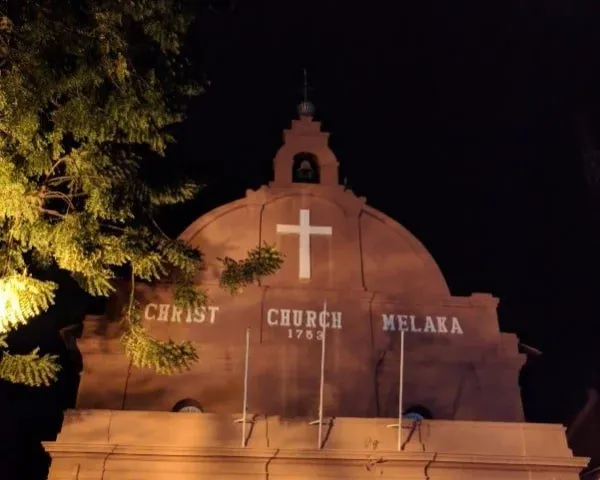
The Stadthuys (1650) and Christ Church (1753) were raised in the practical Dutch colonial style, with thick walls, louvered windows, terracotta finishes. The famous salmon-red came later, in 1911, courtesy of the British. The Dutch had used lime wash.
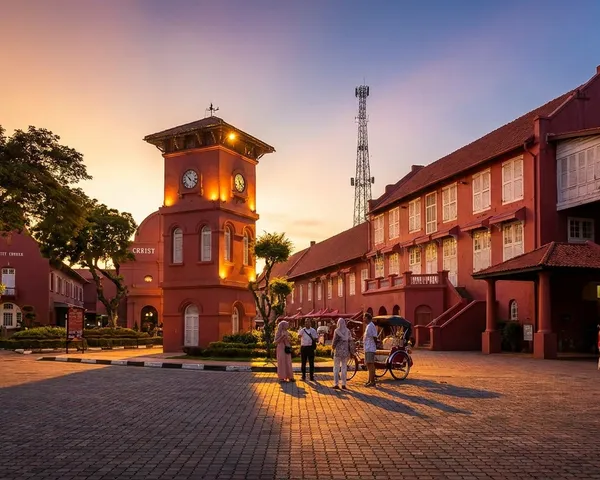
British
Straits Settlements.
The Anglo-Dutch Treaty of 1824 traded Melaka for Bencoolen, a swap that combined Melaka with Penang and Singapore into the Straits Settlements, ruled from London. The British found Melaka useful but not strategic; Singapore took the cargo, Penang took the planters, Melaka took the slow lane.
Schools, town halls, a railway. The British painted the Stadthuys salmon-red in 1911. And, crucially, they didn't bulldoze. By the time independence came, the old Dutch grid and most of the colonial buildings were still standing, simply because nobody had bothered to redevelop.
Three years
of occupation.
The Japanese took Melaka on January 15, 1942, as part of the Malayan Campaign. Three years of military administration, currency collapse, food shortages, and forced labour followed. The Sook Ching massacres, targeted at the ethnic Chinese, left scars across the entire peninsula.
Then on August 15, 1945, surrender. Within weeks, the British returned. Within twelve years, they would leave for good.
Independence
and a UNESCO seal.
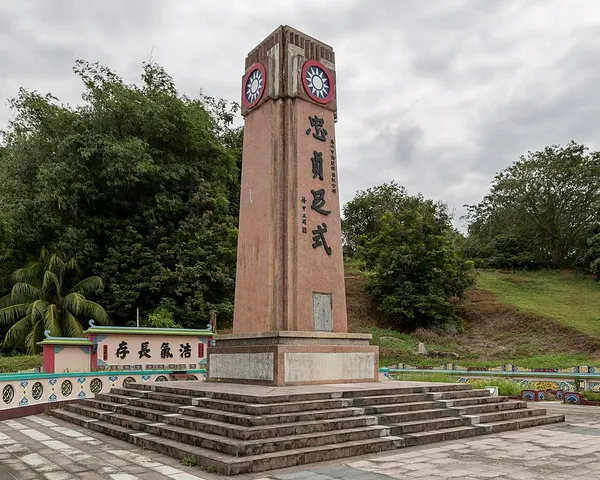
On February 20, 1956, Tunku Abdul Rahman announced Malaya's independence from a rally at Padang Pahlawan, the very ground where the British had once paraded their power. The proclamation followed on August 31, 1957. Melaka had hosted the beginning of the end of empire.
For fifty years the city slumbered as KL boomed. Then in 2008, UNESCO co-inscribed Melaka and George Town as World Heritage Sites, and a quiet old town suddenly had a global brand. Today over twelve million tourists visit each year. The challenge now is the opposite of decline: how do you stay yourself when the world keeps showing up?
Six centuries,
one walking afternoon.
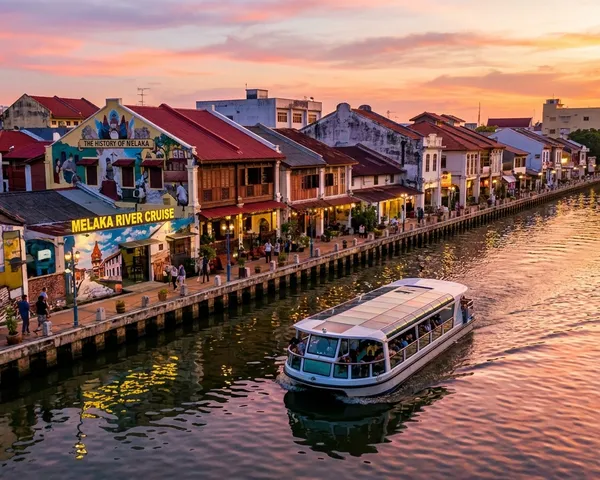
Our 48-hour Heritage Loop trip kit takes you through every era of this timeline in roughly the order it happened, starting at the Sultanate Palace, ending at the modern river. We've walked it; you'll get the timings.
The Melaka Dispatch
Weekly field notes from inside the heritage zone, covering new openings, seasonal eats, and things worth the trip.
You're in! Welcome to the Melaka Dispatch.
No spam. Unsubscribe anytime.