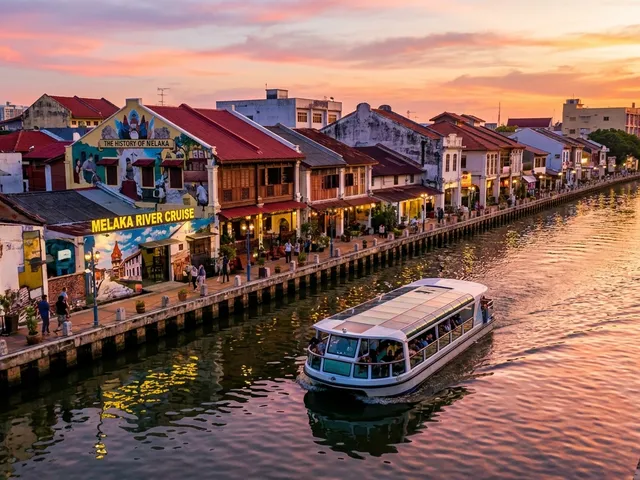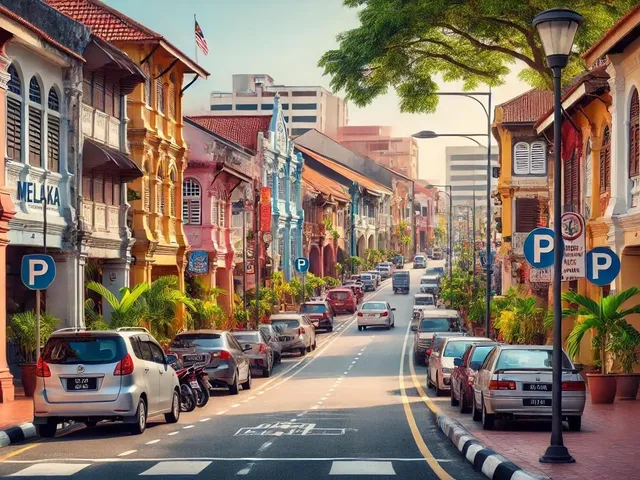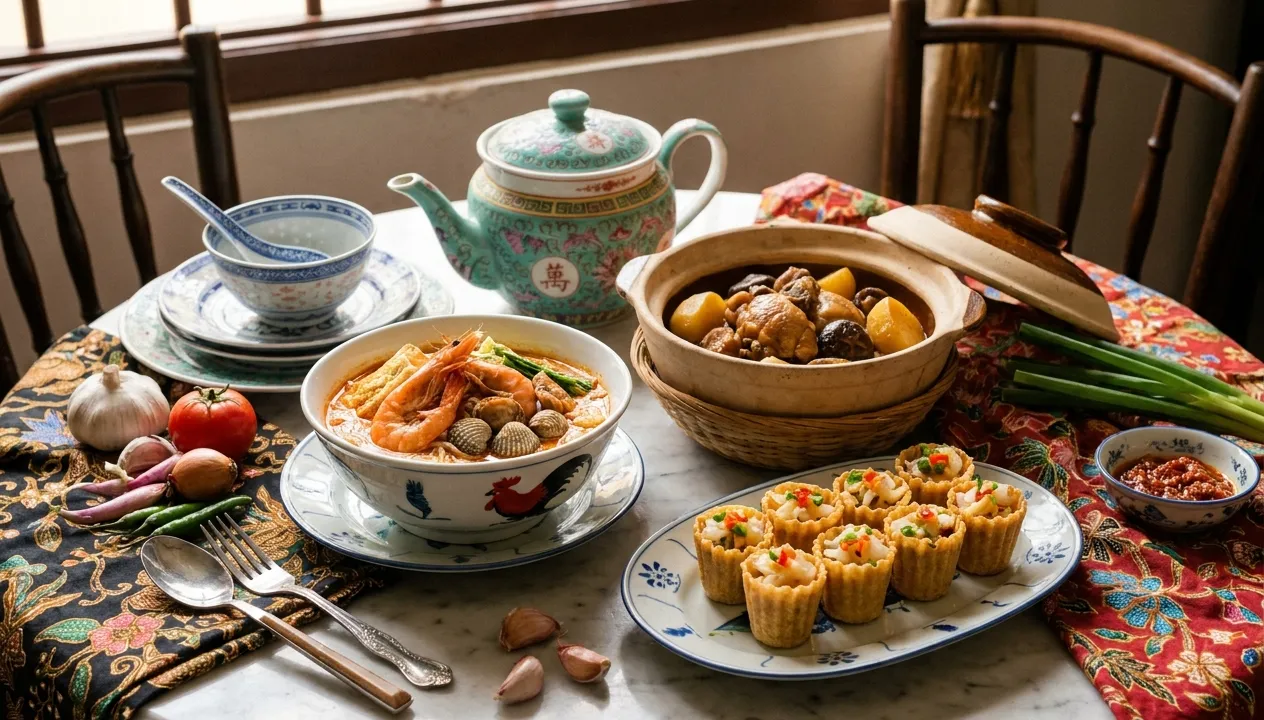
The Peranakan people, descendants of Chinese traders who settled in the Straits Settlements and intermarried with local Malay communities, developed a cuisine that is among the most complex in Southeast Asia. Melaka is its origin point.
Nyonya cooking (the term refers to the female culinary tradition within Peranakan culture) layers aromatics, fermented pastes, coconut milk, and tamarind in ways that reward patience and punish shortcuts. Every family has their own version of every dish, and the debates are fierce.
The Essential Dishes
Ayam Pongteh
Chicken braised with fermented soybean paste (taucu), palm sugar, and shallots until the sauce is thick, glossy, and deeply savoury with a background sweetness. It appears on every Peranakan table and is the dish most Nyonyas will cite when asked what Nyonya food is.
Asam Pedas
A tamarind-soured fish curry, sharp, hot, and complex. Melaka’s version uses ikan tenggiri (Spanish mackerel) as the default fish, cooked with torch ginger flower, okra, and a paste ground from dried chilli, galangal, and lemongrass. The sourness of tamarind is the spine of the dish.
Otak-Otak
Spiced fish paste wrapped in banana or coconut leaves and grilled. The Melakan version is baked directly in the leaf rather than grilled over charcoal (as in the Johor/Singapore version), producing a custard-like, aromatic result. Sold by the piece at roadside stalls.
Laksa Lemak (Nyonya Laksa)
Not to be confused with Penang’s asam laksa. Melaka’s version is coconut-rich, mildly spiced, and topped with daun kesum (Vietnamese mint), sliced cucumber, and prawns. The broth is made from rempah, a toasted spice paste, simmered in thick coconut milk.
Kuih
The Peranakan dessert and snack tradition (kuih) is enormous. A brief entry point:
- Kuih talam, layered green (pandan) and white (coconut) steamed cake
- Onde-onde, glutinous rice balls filled with liquid palm sugar, rolled in coconut
- Ang ku kuih, red tortoise-shaped glutinous rice cakes filled with mung bean paste
Where to Eat
Nancy’s Kitchen (Jalan Hang Lekir) remains the most-cited restaurant for traditional home-style Nyonya cooking. No frills, short menu, consistent.
Selvam and the kopitiam stalls on Jalan Hang Jebat (Jonker Walk) sell individual kuih and otak-otak for RM 1–3 per piece, good for grazing.
The weekend pasar malam (night market, Friday–Sunday on Jonker Walk) has a concentrated stretch of Nyonya snack vendors.
A Note on Authenticity
“Authentic” Nyonya food is a contested category. Every family’s recipe is different, regional variations exist between Melaka and Penang, and contemporary chefs are adapting the tradition with new ingredients. The most useful question is not whether something is authentic, but whether it tastes good, and in Melaka, the answer is usually yes.