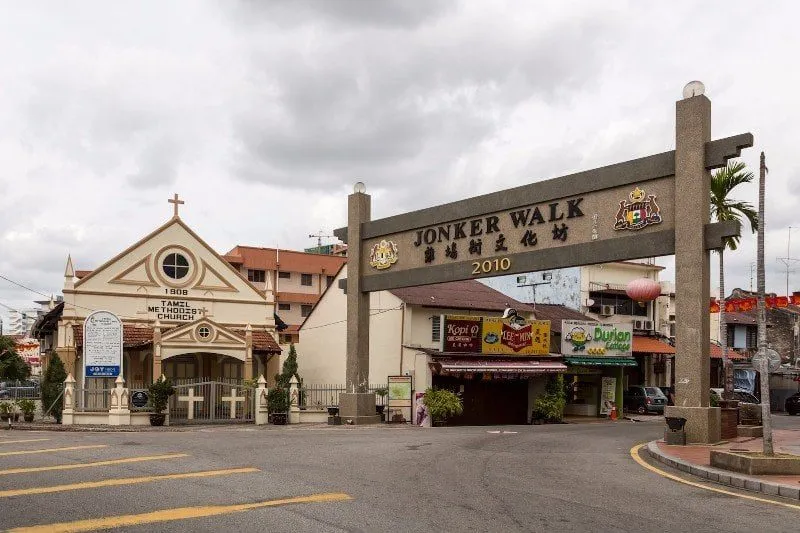
Jonker Street (Jalan Hang Jebat) is Melaka's Chinatown spine, lined with 17th-century shophouses, antique dealers, and street food stalls. By day it's a trader's bazaar; by night it becomes a crowded market.
History and Architecture
Jonker Street takes its English name from Jonker, a Dutch term for a high-ranking merchant. Known in Chinese as 雞場街 (Chicken Market Street), it has been the commercial and residential spine of Melaka’s Chinese community for centuries. The shophouses - typically two to three stories with narrow frontage and deep interior courtyards - date to the 17th and 18th centuries. Many are still occupied by families who have lived there for generations, running antique shops, cafés, or galleries from the ground floor.
Daytime and Evening Character
By day, Jonker Walk is a market street where vendors sell antiques, batik textiles, porcelain, and local handicrafts from shop stalls and the street itself. Customers pick through piles of old postcards, vinyl records, and wooden figurines while shop owners sip tea from tiny porcelain cups. The rhythm is unhurried. On Friday, Saturday, and Sunday evenings from 6pm to midnight, the street transforms into a night market where temporary food stalls appear, musicians perform, and foot traffic swells dramatically.
Food and Nearby Landmarks
Street food is central to the Jonker Walk experience: satay vendors, noodle stalls, and durian dessert shops line the route. Across the river sits the Stadthuys, Melaka’s iconic red Dutch colonial building. Jonker Street begins near the Melaka River and runs roughly parallel to it, making it easy to combine a walk here with a river cruise or a visit to other old-town heritage sites.