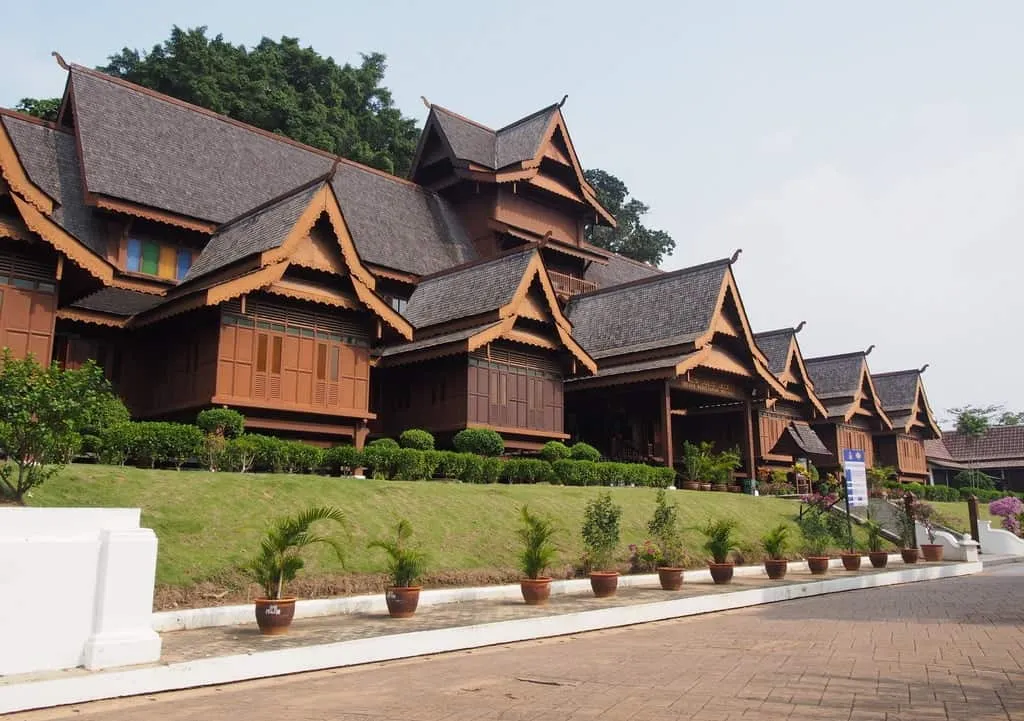
A timber reconstruction of the 15th-century Melaka Sultanate palace, built without nails, displaying 1,300 artifacts across eight chambers that reveal royal life and the sultanate's role as a maritime power.
The Melaka Sultanate Palace Museum stands at the foot of St. Paul’s Hill as a full-scale replica of the palace commissioned by Sultan Mansur Shah in the 15th century, when the sultanate dominated Southeast Asian trade routes. Built using traditional Malay methods, the structure is constructed almost entirely of wood, with intricate carvings and no nails, making it a masterclass in period joinery.
What the Museum Houses
The palace spans eight chambers filled with over 1,300 artifacts. The ground floor displays weaponry, including ornate kris and cannons; the first floor holds royal regalia, textiles, and musical instruments; the upper chambers reconstruct the Sultan’s private quarters, audience hall, and harem quarters. Among the holdings are Portuguese and Dutch records that document the sultanate’s final years, providing context for how this maritime empire fell to colonial powers.
The Rooms and Their Stories
Walking through the audience hall gives you a sense of how diplomats and merchants would have presented themselves to the court. The kitchens, pantries, and living quarters reveal everyday administrative life. One chamber is devoted to the relationship between Islam and the sultanate, explaining how the faith was integrated into governance and social structures. Another traces Melaka’s decline after the Portuguese conquest of 1511.
Planning Your Visit
Allow two hours to explore the eight chambers. The museum is steep in places and can feel warm inside, so wear comfortable shoes and bring water. The gardens surrounding the palace offer shade and views back toward St. Paul’s Church and the Straits.